PC3232: Nuclear & Particle Physics
Welcome!
PC3232 is an intermediate course in nuclear physics with an introduction to particle physics. The course begins by exploring the Standard Model, which seeks to explain the Universe in terms of fundamental particles, interactions, and symmetries. The focus then shifts to nuclear particles and nuclear phenomena, applying these foundational concepts to model and understand key topics such as stability, decay, fission, and fusion. Throughout the course, you will gain an appreciation of how the principles of quantum mechanics and relativity shape our Universe.
Quick Info
- Lectures for Semester 1 of AY2026–27 will be:
- 4 - 6 pm on Wednesdays
- 8 - 10 am on Fridays
- Venue: S14-04-04.
- Lectures will not be webcasted.
- Administrative information and instructions can be found in Schedule and Assessments.
- Office Hours:
- 2:30 - 3:30 pm on Wednesdays
- Venue: Room at the rear of Lab 1 (S12-04-01)
Kindly enter the room using the door at the read of the lab.
Apply Fundamental Knowledge and Methods: Students will apply fundamental ideas (especially from mechanics, special relativity and quantum mechanics) to solve complex problems related to particle interactions and nuclear reactions.
Comprehend Core Concepts & Principles: Students will be able to articulate the fundamental concepts of nuclear and particle physics, including key theories and models.
Analyse & Evaluate Phenomena & Models: Students will critically analyse nuclear and particle physics phenomena and models, assessing their strengths and limitations.
Evaluate Experimental Techniques: Students will evaluate experimental techniques and data interpretation in nuclear and particle physics.
Here are the main topics I typically plan to cover. However, I adjust the course pace based on the class’s progress, so we may not get through everything. I won’t be too concerned about this, as it is more important to ensure you fully understand the material than to rush through topics.
- Particle Physics: A Summary
- A Whirlwind Tour of Special Relativity
- Discovering Stuff
- More About Interactions
- Centre of Mass Frame*
- Particle Interactions: Cross Sections
- Review of QM I
- Parity
- Resonances & Lifetimes
- Nuclear reactions
- Neutron Moderation
- Particle Interactions: Processes
- Getting A Feel For The Nucleus
- Modelling the Nucleus I: Fermi Model
- Nuclear Properties I: Size
- Nuclear Properties II: Binding Energy
- Review of QM II
- Nuclear Magic & The Shell Model
- Review of Quantum Mechanics III*
- Radioactivity: General Ideas
- Radioactivity: \(\alpha\)-decay
- Radioactivity: \(\gamma\)-decay
- Radioactivity: \(\beta\)-decay
- Energy: Fission
- Energy: Fusion
Recommended Text & Course Notes
Recommended Text
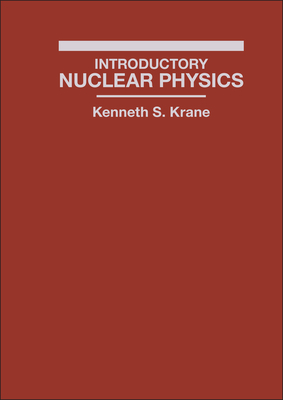
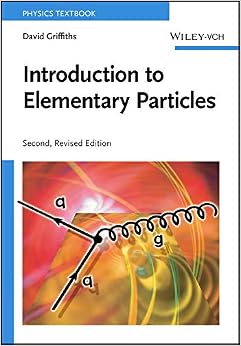
Historically, the two excellent books shown alongside were used in this course. However, these books are expensive and cover material at a much greater depth than what’s required for this course. I have also utilised various other resources to create the course content. As a result, I have opted not to recommend a particular book, but to expand my notes to make them self-contained.
TLDR: I do not recommend a specific textbook for this course. Use my notes instead that are at a level that matched the expectations of this course.zs
Course Notes
- I will go through almost all the chapters in the course notes.
- Chapters marked with an asterisk (*) cover crucial prerequisite knowledge.
I have included this material because I understand that not everyone may be thoroughly familiar with all these necessary topics. - Chapters bearing double asterisks** are supplementary topics. I have included them for the sake of completion or because it is a fun topic. These will not be examined.
- I will typically release notes relevant to a discussion a week in advance.